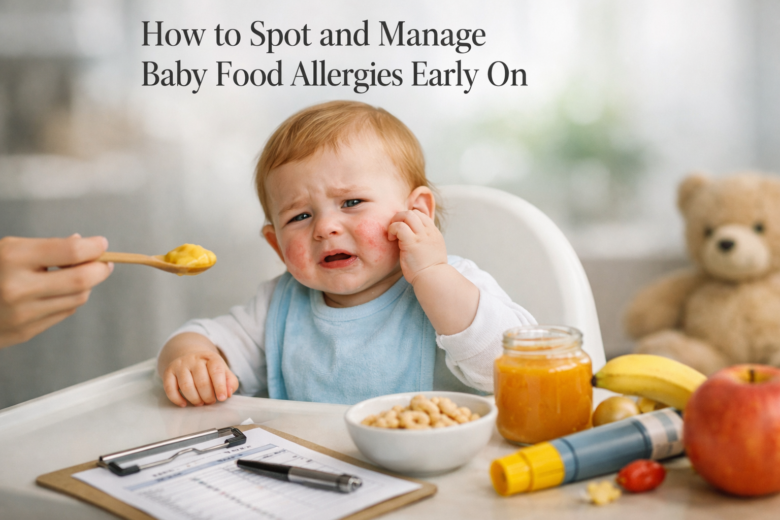
Introducing solid foods is an exciting milestone for families, but it can also raise concerns about possible food allergies.
Learning to recognize early signs and knowing how to respond helps parents protect their baby’s health while continuing to introduce nutritious foods safely.
Understanding the most common triggers, observing your baby carefully, and introducing foods gradually can make the process much smoother.
Common Foods That Can Cause Allergies in Babies
Some foods are more likely to trigger allergic reactions than others. While many babies tolerate these foods without problems, being aware of them helps parents stay attentive during the first introductions.
The most common baby food allergens include eggs, peanuts, milk, soy, wheat, fish, shellfish, and tree nuts. Pediatric experts often recommend introducing these foods slowly and one at a time.
Introducing a new food every few days gives parents time to observe how the baby reacts before adding another ingredient.
Introduce only one new food every 3 days. This makes it easier to identify the cause if an allergic reaction appears.
Early Signs of a Baby Food Allergy
Allergic reactions can appear quickly or develop within a few hours after eating. Some symptoms are mild, while others require immediate medical attention.
Common early signs include:
- Red rash or hives around the mouth or body
- Swelling of lips, face, or eyelids
- Vomiting or stomach discomfort
- Persistent coughing or wheezing
- Unusual fussiness after eating
Most mild reactions involve skin symptoms, while more serious reactions may affect breathing or digestion.
| Symptom | Severity | Recommended Action |
|---|---|---|
| Mild rash | Low | Monitor and avoid the food temporarily |
| Vomiting | Moderate | Contact a pediatrician |
| Breathing difficulty | High | Seek emergency medical care |
Safe Ways to Introduce New Foods
Gradual introduction is the safest strategy when expanding your baby’s diet. Start with simple ingredients that are easy to digest and unlikely to cause reactions.
Helpful practices include:
- Offer new foods during daytime meals
- Start with small portions
- Observe your baby for several hours after eating
- Keep a simple food journal
Tracking foods and reactions helps parents identify patterns quickly if a reaction occurs.
Keep a small note on your phone with:
• Food introduced
• Date and time
• Baby’s reaction
This simple habit can help pediatricians identify allergies faster.
What to Do If You Suspect an Allergy
If your baby shows signs of a reaction, stop offering the suspected food immediately. Mild reactions may disappear quickly, but the food should not be given again until you speak with a healthcare professional.
Parents should document the symptoms, including when they appeared and what food was eaten. This information helps doctors determine whether the reaction was a true allergy or a temporary sensitivity.
Doctors may recommend allergy testing or supervised food introduction depending on the severity of the reaction.
Foods Often Considered Gentle for First Introductions
Many families begin with foods that are generally well tolerated by infants. These foods help babies adjust to new textures and flavors while minimizing risk.
- Mashed banana
- Avocado puree
- Cooked sweet potato
- Rice cereal
- Soft oatmeal
Introducing simple foods first builds a safe foundation before trying more complex ingredients.
Most babies do not develop food allergies. Careful introduction and observation simply help ensure that if a reaction occurs, it can be identified early and managed safely.
Building Confidence While Introducing New Foods
Exploring new foods should remain a positive experience for both parents and babies.
By introducing foods slowly, watching for symptoms, and keeping track of what your baby eats, families can feel more confident during this stage.
Medical Disclaimer: This content is for informational and educational purposes only and does not substitute professional medical advice, diagnosis, or treatment. Always seek the advice of your pediatrician or other qualified health provider with any questions you may have regarding a medical condition or the introduction of new foods. In the event of a severe allergic reaction or breathing difficulties, seek emergency medical care immediately.

About the Author: Manager Joe is a nutrition specialist focusing on infant dietary development. With a passion for evidence-based guidance, Manage Joe helps parents navigate the complexities of early childhood nutrition with confidence and safety.