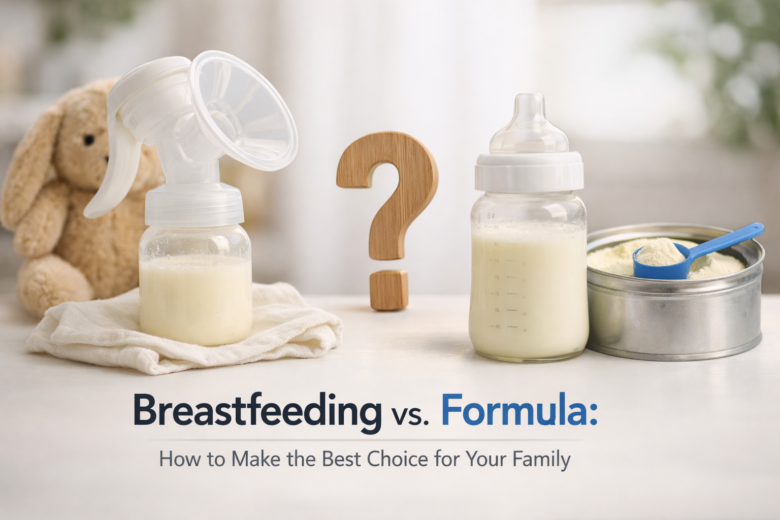
Choosing how to feed a baby is one of the first big decisions parents make.
Both breastfeeding and formula feeding can nourish a baby and support healthy growth. The best choice depends on lifestyle, health factors, and what works for your family’s routine.
Instead of thinking about one option as “better,” many parents focus on what is realistic, comfortable, and sustainable. Understanding the benefits and challenges of each option can help you make a confident decision.
Healthy babies grow well with either breastfeeding or formula when feeding is done correctly and consistently. Many families also combine both methods.
Understanding the Benefits of Breastfeeding
Breast milk is naturally designed for babies and changes over time to match their nutritional needs. It contains antibodies that help protect babies from infections and supports immune system development.
Breastfeeding can also create strong bonding moments. Skin-to-skin contact often helps babies feel calm and secure. Many parents also appreciate the convenience since milk is always available without preparation.
However, breastfeeding can require practice and patience. Some parents experience challenges such as latching difficulties, milk supply concerns, or physical discomfort during the first weeks.
| Breastfeeding Advantages | Considerations |
|---|---|
| Natural antibodies and immune support | May require time to establish routine |
| No preparation or cost | Can be physically demanding |
| Promotes bonding | Feeding schedule depends on parent availability |
When Formula Feeding Can Be a Great Option
Infant formula is designed to provide the nutrients babies need for healthy growth. It is carefully regulated and can be a reliable feeding option for many families.
“Always follow the manufacturer’s instructions for preparation to ensure proper nutrition and safety.” (
Formula feeding can offer flexibility because other caregivers can participate in feeding time. This may help parents share responsibilities and create more predictable schedules.
For mothers who choose breastfeeding but need more flexibility, our guide to pumping and storing breast milk safely provides all the necessary storage timelines.
Some families choose formula due to medical reasons, work schedules, or personal preference. For many parents, formula feeding becomes a practical and comfortable solution.
| Formula Feeding Advantages | Considerations |
|---|---|
| Flexible feeding schedule | Requires preparation and sterilization |
| Anyone can feed the baby | Cost of formula products |
| Predictable intake amounts | Requires bottles and supplies |
Factors That Help Parents Decide
Every family situation is unique. Some parents base their decision on work schedules, health conditions, or the need for flexibility during daily routines.
It can also help to talk with pediatricians, lactation consultants, or other parents. Professional guidance often provides reassurance and practical tips for feeding success.
Many families discover that combination feeding—using both breast milk and formula—offers balance. This approach can provide nutritional benefits while allowing flexibility.
- Parent lifestyle and work schedule
- Medical considerations
- Comfort and personal preference
- Support system at home
- Baby’s feeding response
Tips for a Smooth Feeding Experience
Whichever feeding method you choose, creating a calm feeding routine can make a big difference. Babies often respond well to consistent positions, quiet environments, and attentive caregivers.
Watching hunger cues such as rooting, sucking motions, or hand-to-mouth movements can help parents feed babies before they become too fussy.
Keeping feeding equipment clean, maintaining proper storage of milk or formula, and following pediatric recommendations are also important for safe feeding.
Many parents find that feeding time becomes a special bonding moment. Eye contact, gentle talking, and holding the baby close can strengthen emotional connection regardless of feeding method.
Finding the Right Choice for Your Family
The decision between breastfeeding and formula feeding is personal. What matters most is that the baby receives consistent nutrition and care.
Parents often discover that confidence grows with time. Whether breastfeeding, formula feeding, or combining both, a supportive environment and reliable information can make the journey easier.
In the end, the best feeding choice is the one that keeps both baby and parents healthy, comfortable, and supported.
Medical Disclaimer: This content is for informational and educational purposes only and does not substitute professional medical advice, diagnosis, or treatment. Always seek the advice of your pediatrician or other qualified health provider with any questions you may have regarding a medical condition or the introduction of new foods. In the event of a severe allergic reaction or breathing difficulties, seek emergency medical care immediately.

About the Author: Manager Joe is a nutrition specialist focusing on infant dietary development. With a passion for evidence-based guidance, Manage Joe helps parents navigate the complexities of early childhood nutrition with confidence and safety.