
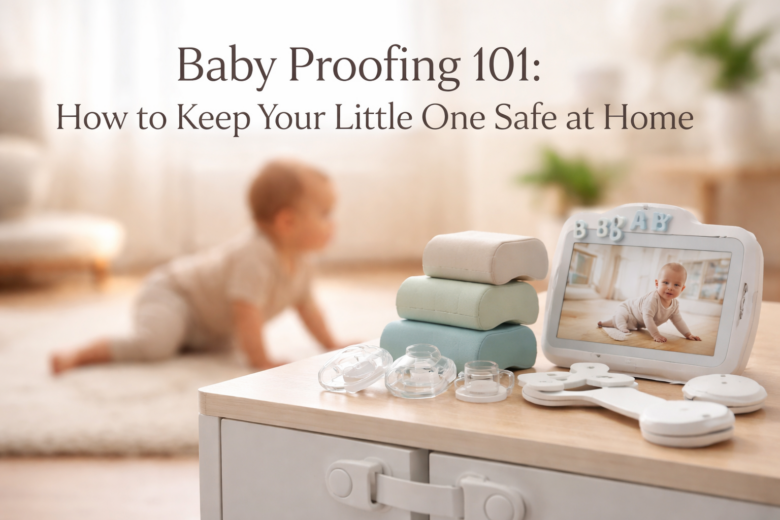
When babies begin to roll, crawl, and explore, the house suddenly becomes a place full of discoveries and potential hazards. Baby proofing helps transform your home into a safe environment where your child can explore with less risk.
Instead of trying to control every movement, the goal is to reduce dangers and create safer spaces for curiosity and learning.
Identify the Most Common Household Hazards
Before installing safety tools, it’s important to walk through your home and observe it from a baby’s perspective. What seems harmless to adults can become very attractive to curious little hands.
Common hazards usually include electrical outlets, unstable furniture, sharp table corners, cleaning products, and small objects that could be swallowed.
Here is a quick overview of typical risks found in many homes:
| Area | Potential Risk | Simple Protection |
|---|---|---|
| Living Room | Sharp furniture corners | Corner protectors |
| Kitchen | Cleaning products | Locked cabinets |
| Bedroom | Unstable furniture | Wall anchors |
| Bathroom | Slippery surfaces | Non-slip mats |
Recognizing these risks is the first step to creating a safer environment.
Secure Furniture and Electrical Areas
Babies often pull themselves up using furniture, which means items like bookshelves, dressers, and televisions can become tipping hazards. Anchoring heavy furniture to the wall greatly reduces this risk.
Electrical outlets are another major concern. Babies are naturally curious and may try to insert objects into sockets.
A few protective adjustments can make a big difference:
• Install outlet covers on all unused sockets
• Anchor tall furniture to the wall
• Hide or secure loose cables
• Avoid placing climbable objects near windows
These simple actions dramatically reduce the likelihood of accidents as your baby begins to move more independently.
Create Safe Zones for Exploration
Instead of restricting movement everywhere, many parents create designated safe zones where babies can crawl and play freely. This encourages development while maintaining safety.
Soft play mats, foam flooring, and baby gates can help define these areas.
A safe play zone should be free of sharp objects, loose cords, choking hazards, and unstable furniture. Think of it as a small exploration area designed just for your baby.
These zones allow babies to practice motor skills while parents gain peace of mind.
Protect Kitchens and Bathrooms Carefully
Kitchens and bathrooms often contain the highest concentration of hazards. Hot surfaces, chemicals, and slippery floors can quickly lead to accidents if not secured.
Cabinet locks are one of the most effective safety tools in these areas. They prevent babies from accessing dangerous items such as cleaning products, medicines, or sharp utensils.
Extra precautions that help include:
• Using stove knob covers
• Keeping cleaning products in high cabinets
• Installing toilet locks
• Placing non-slip mats in bathtubs and floors
These small changes greatly reduce the risks found in these high-traffic areas.
Stay One Step Ahead of Development
Baby proofing is not a one-time task. As babies grow and develop new skills like crawling, standing, and climbing, new risks appear.
A useful way to stay ahead is to regularly reassess your home environment.
- Rolling baby → remove loose blankets and small objects
- Crawling baby → protect outlets and secure furniture
- Standing baby → protect corners and edges
- Walking baby → install stair gates
By adjusting your home as your child grows, you maintain a safe environment through every stage.
Final Thoughts
Baby proofing doesn’t mean eliminating every possible risk, but it does mean creating a safer space where your child can explore and learn.
Simple adjustments like securing furniture, covering outlets, and locking cabinets can prevent many common accidents.
With a thoughtful approach and regular safety checks, your home can become a comfortable and secure environment for your baby’s first adventures.
Medical Disclaimer: This content is for informational and educational purposes only and does not substitute professional medical advice, diagnosis, or treatment. Always seek the advice of your pediatrician or other qualified health provider with any questions you may have regarding a medical condition or the introduction of new foods. In the event of a severe allergic reaction or breathing difficulties, seek emergency medical care immediately.

About the Author: Manager Joe is a nutrition specialist focusing on infant dietary development. With a passion for evidence-based guidance, Manage Joe helps parents navigate the complexities of early childhood nutrition with confidence and safety.