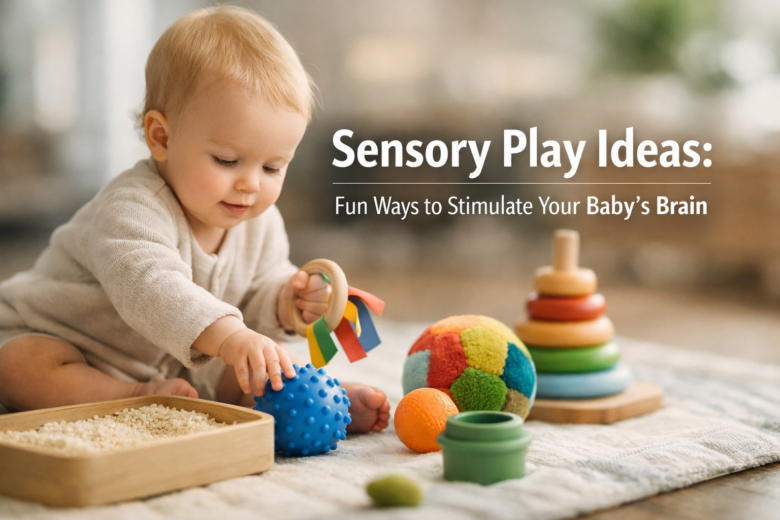
Sensory play is one of the most effective ways to support your baby’s brain development.
Through simple experiences involving touch, sight, sound, and movement, babies begin building neural connections that help them learn about the world around them.
These playful activities don’t require expensive toys. In fact, everyday household items can create powerful sensory experiences that stimulate curiosity and encourage exploration.
Why Sensory Play Is Important for Babies
During the first year of life, a baby’s brain forms millions of neural connections every second. Sensory play strengthens these connections by engaging multiple senses at the same time.
Sensory play also encourages babies to experiment. They learn cause and effect by shaking objects, splashing water, or squeezing soft materials.
Short and frequent sensory experiences are more effective than long activities. Just a few minutes of playful stimulation several times a day can significantly support cognitive growth.
Simple Sensory Activities You Can Try at Home
Many sensory activities can be created using simple materials already found in your home.
Soft fabrics, colorful objects, and gentle sounds can instantly capture your baby’s attention and encourage exploration.
Here are a few ideas that work well for newborns and infants:
- Let your baby touch fabrics with different textures like cotton, fleece, and silk.
- Use colorful scarves or ribbons and slowly move them in front of your baby.
- Shake a soft rattle or small bell to stimulate auditory senses.
- Place safe mirrors near your baby so they can observe reflections.
- Allow supervised water play during bath time.
These simple activities help babies discover how their senses interact with the world.
Texture Exploration: A Powerful Brain Stimulator
Touch is one of the earliest senses babies develop. Exploring different textures helps stimulate nerve endings and strengthens sensory pathways.
You can create a small sensory basket filled with safe objects that feel different to the touch.
| Texture Type | Example Objects | Benefit |
|---|---|---|
| Soft | Plush toys, cotton cloth | Comfort and calming effect |
| Rough | Natural sponge, textured ball | Stimulates tactile awareness |
| Smooth | Wood blocks, silicone toys | Encourages grip development |
Allow your baby to explore each object slowly. Watching how they react provides valuable insight into their sensory preferences.
Visual and Movement Activities for Brain Growth
Visual stimulation is another powerful way to support early learning. Babies are naturally drawn to contrast, movement, and bright colors.
Slow movements help babies track objects with their eyes, strengthening visual coordination.
You can create engaging visual play experiences using simple items like:
- Black and white cards for newborn visual stimulation
- Colorful hanging toys above the crib
- Moving light reflections on the wall
- Slowly rolling a soft ball across the floor
- Choose 3 safe objects with different textures
- Add one colorful visual object
- Include a soft sound like a rattle
- Let your baby explore freely for a few minutes
Combining multiple sensory elements helps babies build stronger neural pathways.
Sound and Music for Sensory Learning
Sound-based activities are excellent for stimulating the auditory system. Babies begin recognizing voices and tones very early.
Gentle music, rhythmic sounds, and even everyday noises can support auditory learning.
Simple sound activities include:
- Singing lullabies while making eye contact
- Playing soft instrumental music
- Using baby-safe rattles or bells
- Tapping lightly on different surfaces
Each sound introduces babies to rhythm and variation, which strengthens listening skills and emotional bonding.
Creating a Daily Sensory Routine
Consistency helps babies feel secure while still encouraging exploration. A short sensory routine each day can become a fun bonding moment.
Morning activities may include visual and movement play, while evening routines can focus on calming sensory experiences like soft music or gentle textures.
The goal of sensory play is not to overwhelm but to create enjoyable moments that stimulate curiosity and development. With simple materials and a little creativity, you can turn everyday interactions into powerful learning experiences for your baby.
Medical Disclaimer: This content is for informational and educational purposes only and does not substitute professional medical advice, diagnosis, or treatment. Always seek the advice of your pediatrician or other qualified health provider with any questions you may have regarding a medical condition or the introduction of new foods. In the event of a severe allergic reaction or breathing difficulties, seek emergency medical care immediately.

About the Author: Manager Joe is a nutrition specialist focusing on infant dietary development. With a passion for evidence-based guidance, Manage Joe helps parents navigate the complexities of early childhood nutrition with confidence and safety.