Introducing solid foods is an exciting milestone in a baby’s development. For many first-time parents, it can also bring questions and uncertainty.
Knowing when to begin, what foods to offer, and how to make the experience safe and enjoyable helps create a positive start for your baby’s relationship with food.
Starting slowly and observing your baby’s reactions is key. Each child develops differently, so patience and flexibility make the process smoother for everyone.
Signs Your Baby Is Ready for Solid Foods
Before offering the first spoonful, it’s important to recognize the readiness signals. Babies communicate through behavior when their bodies are prepared for this new stage.
Common readiness signs include sitting upright with support, being able to hold their head steady, and showing interest when adults eat nearby. Some babies may also try to reach for food or open their mouths when a spoon approaches.
Parents should avoid starting solids too early. Beginning before the digestive system is mature may increase the risk of choking or digestive discomfort. Waiting until the baby demonstrates readiness ensures a safer transition.
- Baby can sit with support
- Good head and neck control
- Shows interest in food
- Opens mouth when food approaches
- Can swallow soft foods
First Foods to Introduce
Choosing the first foods can feel overwhelming, but simple and nutritious options are often the best choice. Soft textures and mild flavors help babies adapt easily.
While introducing new textures, it’s crucial to monitor your baby for any signs of discomfort. Check our guide on how to spot baby food allergies early on for more details.
Iron-rich foods are usually recommended first because babies’ iron stores start decreasing around six months. Examples include pureed meats, iron-fortified cereals, lentils, and mashed beans.
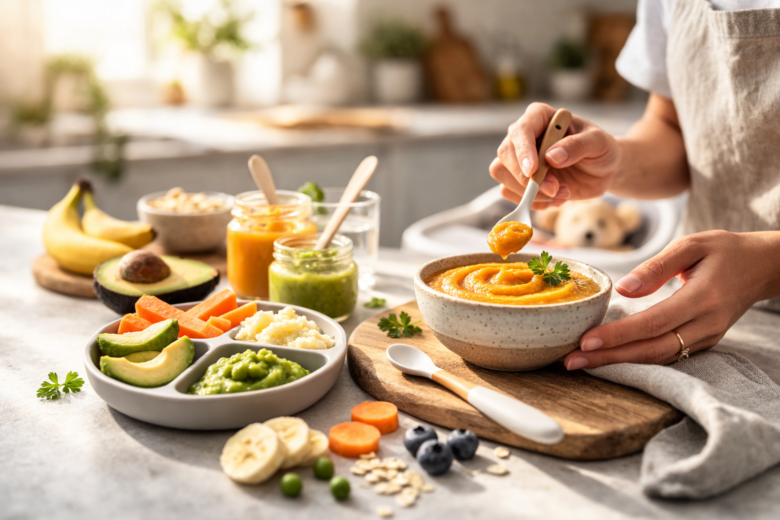
Fruits and vegetables can also be introduced early. Mashed banana, avocado, sweet potato, and carrots are popular beginner options. The goal is not large portions but allowing babies to explore new tastes and textures gradually.
| Food Type | Examples | Benefits |
|---|---|---|
| Iron-Rich Foods | Pureed chicken, lentils | Supports brain development |
| Vegetables | Sweet potato, carrot | Provides vitamins and fiber |
| Fruits | Banana, avocado | Natural energy and nutrients |
Safe Feeding Tips for Beginners
Safety is one of the most important aspects of introducing solids. Babies are still learning how to chew and swallow, so food preparation matters.
Foods should be soft, mashed, or pureed to reduce choking risks. Hard foods like raw carrots, nuts, or whole grapes should be avoided or properly modified until the baby is older.
Another important tip is introducing one new food at a time. Waiting a few days between new foods helps parents observe potential allergies or sensitivities.
- Use small spoons and soft textures
- Offer food after milk feeding
- Allow babies to explore food with their hands
- Stay close and supervise during meals
- Keep mealtimes relaxed and pressure-free
Creating a Simple Feeding Routine
Establishing a feeding routine helps babies adapt to the new habit of eating solids. At first, one small meal per day is enough while the baby continues to rely mostly on breast milk or formula.
Gradually, the number of meals can increase as the baby becomes more comfortable. Many parents start with breakfast or lunch because babies are typically more alert during these times.
Consistency helps babies learn what to expect. Offering meals at similar times each day supports digestion and builds a healthy eating pattern.
- Morning: Breast milk or formula
- Late morning: Small portion of solids
- Afternoon: Milk feeding
- Evening: Milk feeding and rest
Encouraging Healthy Eating Habits
Introducing solids is not only about nutrition but also about building lifelong eating habits. Allowing babies to explore textures and flavors encourages curiosity about food.
Parents should avoid forcing food or expecting large portions at the beginning. Babies naturally regulate how much they need to eat. Respecting their signals helps build trust and positive associations with meals.
Family mealtime can also play a role. Babies who observe others eating often become more interested and motivated to try new foods themselves.
Conclusion
Starting solids is a memorable stage for both parents and babies. With patience, simple food choices, and safe feeding practices, the transition becomes a positive and enjoyable experience.
By watching readiness signs, offering nutritious options, and creating a relaxed routine, first-time parents can confidently guide their baby through this new phase.
Over time, these small moments of discovery at the table help lay the foundation for healthy eating habits that last a lifetime.
Medical Disclaimer: This content is for informational and educational purposes only and does not substitute professional medical advice, diagnosis, or treatment. Always seek the advice of your pediatrician or other qualified health provider with any questions you may have regarding a medical condition or the introduction of new foods. In the event of a severe allergic reaction or breathing difficulties, seek emergency medical care immediately.

About the Author: Manager Joe is a nutrition specialist focusing on infant dietary development. With a passion for evidence-based guidance, Manage Joe helps parents navigate the complexities of early childhood nutrition with confidence and safety.