
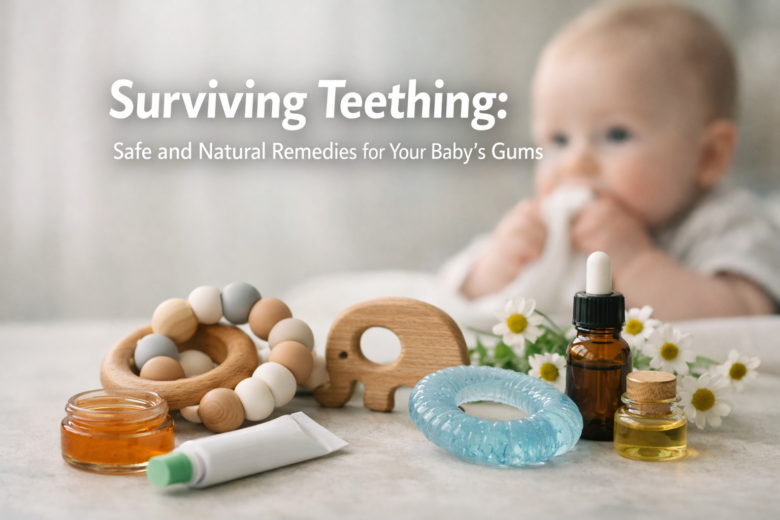
Teething is one of the first big milestones in a baby’s life. While exciting for parents, it can also be uncomfortable for little ones.
Swollen gums, irritability, drooling, and trouble sleeping are common signs that the first teeth are on their way.
The good news is that there are several safe and natural ways to help soothe your baby’s gums. With simple techniques and gentle remedies, you can make this stage much easier for both you and your baby.
How to Recognize Teething Symptoms
Before using any remedy, it helps to identify whether your baby is actually teething. Most babies begin teething between 4 and 7 months, although it can vary.
Common signs include:
- Increased drooling
- Swollen or sensitive gums
- Chewing on objects
- Mild irritability
- Slight sleep disruption
Some babies may also rub their cheeks or ears because gum pressure can spread through the jaw area. Recognizing these symptoms early helps parents respond quickly and provide comfort.
Natural Ways to Soothe Your Baby’s Gums
Many parents prefer natural solutions to relieve teething pain. These methods are gentle, safe, and easy to apply at home.
One effective remedy is using a clean, chilled washcloth. The cool temperature helps reduce inflammation in the gums while the soft texture provides something safe to chew on.
Another helpful option is teething toys made from natural rubber or silicone. When slightly cooled in the refrigerator, these toys offer soothing pressure on sore gums.
Gentle gum massage can also provide relief. Washing your hands and softly rubbing the baby’s gums with a clean finger stimulates circulation and helps reduce discomfort.
Foods That Help During the Teething Phase
If your baby has already started solid foods, certain options can help soothe irritated gums while also providing nutrition.
Below is a simple reference table showing foods that are commonly recommended during teething.
| Food | Benefit | Tip |
|---|---|---|
| Chilled Banana | Soft and easy to chew | Serve slightly cold |
| Cold Yogurt | Cooling effect for gums | Use plain yogurt |
| Soft Apple Puree | Gentle texture | Serve slightly chilled |
These foods provide relief while keeping meals enjoyable during this sensitive stage.
Comfort Techniques That Calm Your Baby
Beyond gum relief, emotional comfort also plays an important role in helping babies cope with teething discomfort.
Extra cuddling and skin-to-skin contact can significantly calm a teething baby. The familiar warmth of a parent helps reduce stress and promotes relaxation.
Distraction is another powerful tool. Playing with toys, reading a book, or taking a short walk outside can shift the baby’s focus away from gum pain.
Gentle bedtime routines can also help improve sleep. A warm bath followed by a calming environment can relax your baby before bedtime, even when teething symptoms are present.
What to Avoid During Teething
While many remedies exist online, not all of them are safe for infants. Parents should avoid certain practices that may cause harm.
Frozen objects, for example, may seem soothing but can be too hard for delicate gums. Instead, items should be chilled rather than frozen.
Teething gels containing numbing ingredients should also be used cautiously and only when recommended by a pediatrician.
Honey and certain herbal products should never be given to babies under one year old due to potential health risks.
Teething Timeline Overview
Understanding when teeth usually appear can help parents prepare for future stages.
- 4–7 months — first lower front teeth
- 8–12 months — upper front teeth
- 9–16 months — lateral incisors
- 13–19 months — first molars
- 16–23 months — canine teeth
Every baby develops at their own pace, so small variations are completely normal.
Conclusion
Teething can be a challenging stage for babies and parents alike, but it is also a natural and temporary part of development. With patience, gentle care, and safe remedies, it is possible to ease your baby’s discomfort and make the process more manageable.
Natural solutions like chilled teething toys, soft foods, gum massage, and comforting routines can provide effective relief without relying on harsh treatments.
By understanding your baby’s symptoms and responding with soothing techniques, you help create a calm and supportive environment during this important milestone.
Medical Disclaimer: This content is for informational and educational purposes only and does not substitute professional medical advice, diagnosis, or treatment. Always seek the advice of your pediatrician or other qualified health provider with any questions you may have regarding a medical condition or the introduction of new foods. In the event of a severe allergic reaction or breathing difficulties, seek emergency medical care immediately.

About the Author: Manager Joe is a nutrition specialist focusing on infant dietary development. With a passion for evidence-based guidance, Manage Joe helps parents navigate the complexities of early childhood nutrition with confidence and safety.